PROJECT BACKGROUND:
For my Independent Research Project at the Royal College of Art, London, I set out to advance inclusive design in retail-focusing on the often-overlooked needs of neurodiverse customers. By stepping into the shoes of a sales assistant and using ethnographic methods like service safaris and shopping shadowing, I uncovered barriers that affect all shoppers, not just the neurodiverse. Co-creative workshops with neurodiverse participants deepened these insights, leading to the development and testing of a service blueprint that made retail experiences more intuitive and accessible for everyone.
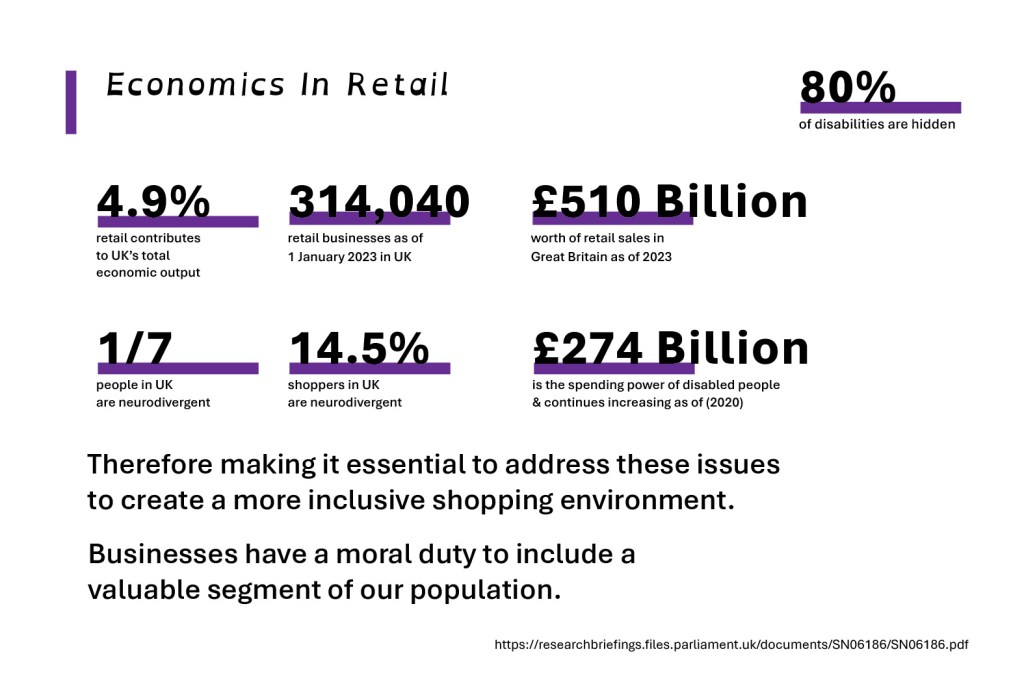
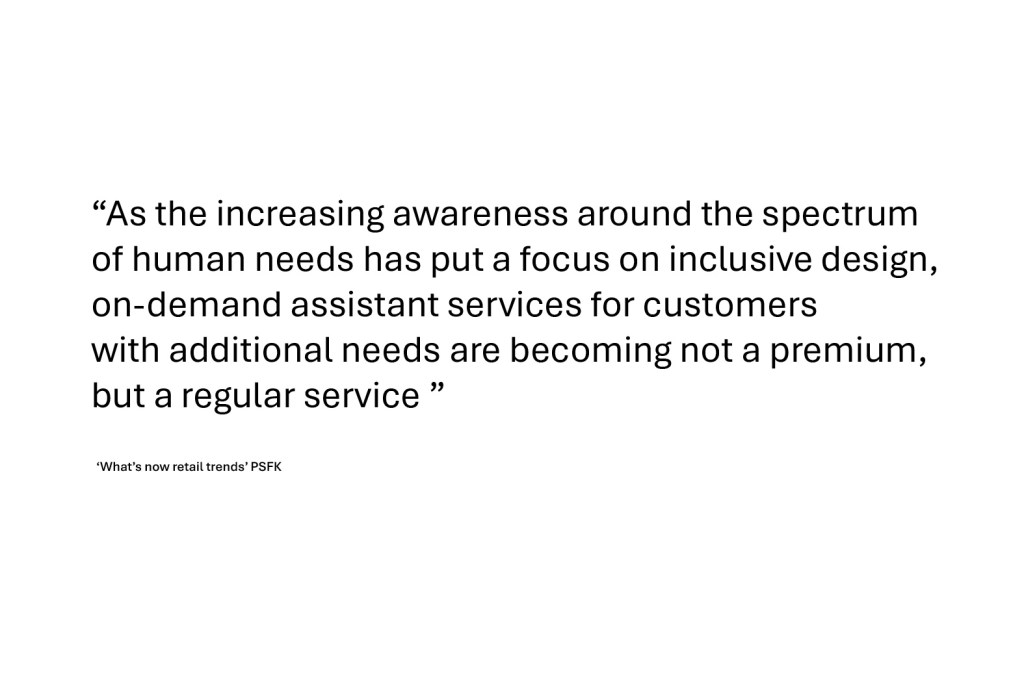
This approach revealed that inclusive design not only drives meaningful social change but also creates tangible business value. As retail evolves to prioritise accessibility and enhance in-store experiences, Our project emphasises diverse needs, promoting a more equitable society, and highlights the important role brands can play in advocating for social causes like neurodiversity, which is crucial for improved business outcomes.
PROJECT TIMELINE:
5 months: April 2024 – August 2024
TEAM:
FRANCE & BOSKY
MY ROLE
Framed the design challenge around inclusive retail for neurodiverse customers, balancing user needs with business value. Embedded on-ground as a sales assistant to gain operational insight and identify systemic barriers.
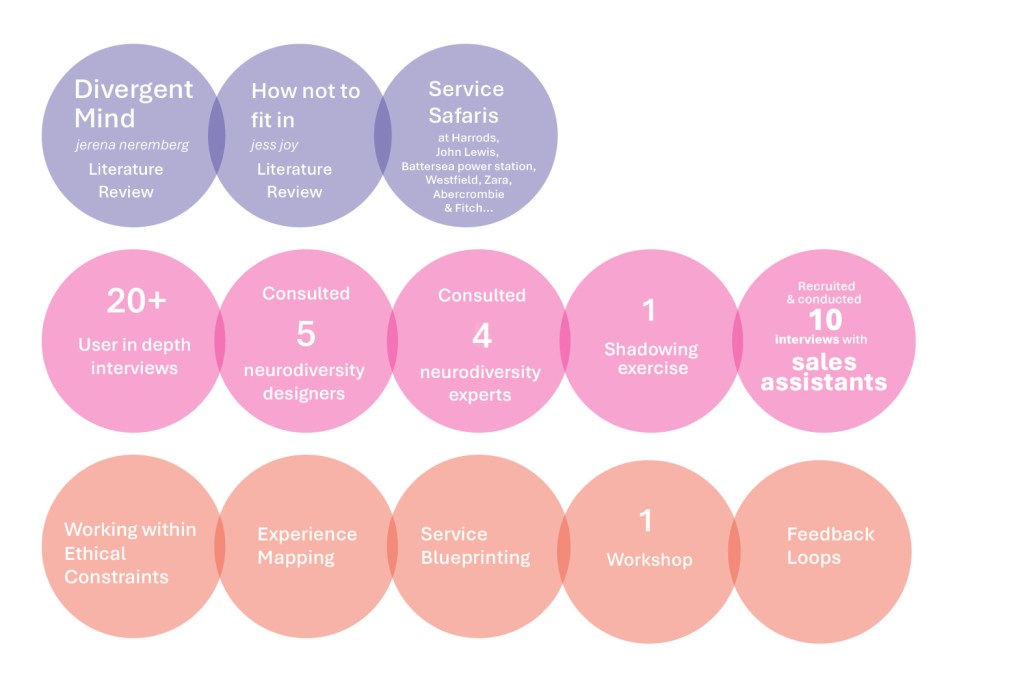
Led multi-modal research (ethnography, service safaris, expert interviews), synthesised findings through experience maps and blueprints, and facilitated co-creative workshops with neurodiverse users.
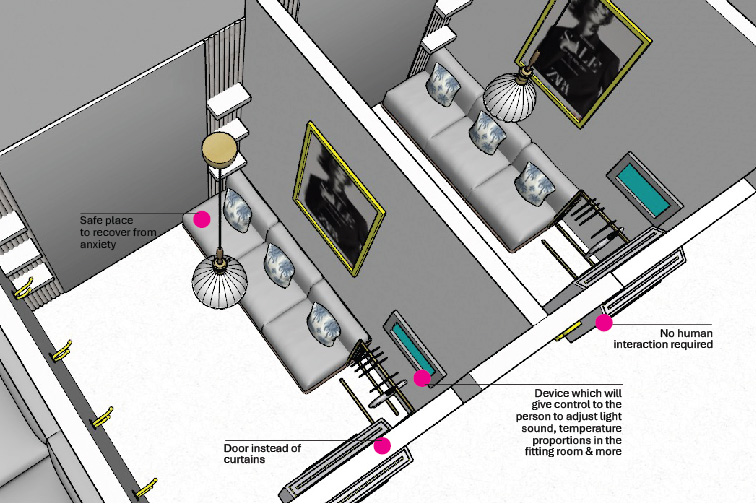
Developed a speculative service model, prototyped key touchpoints, and delivered a strategic implementation framework — demonstrating inclusive design as a driver of customer loyalty and business growth.
PROBLEM STATEMENT:
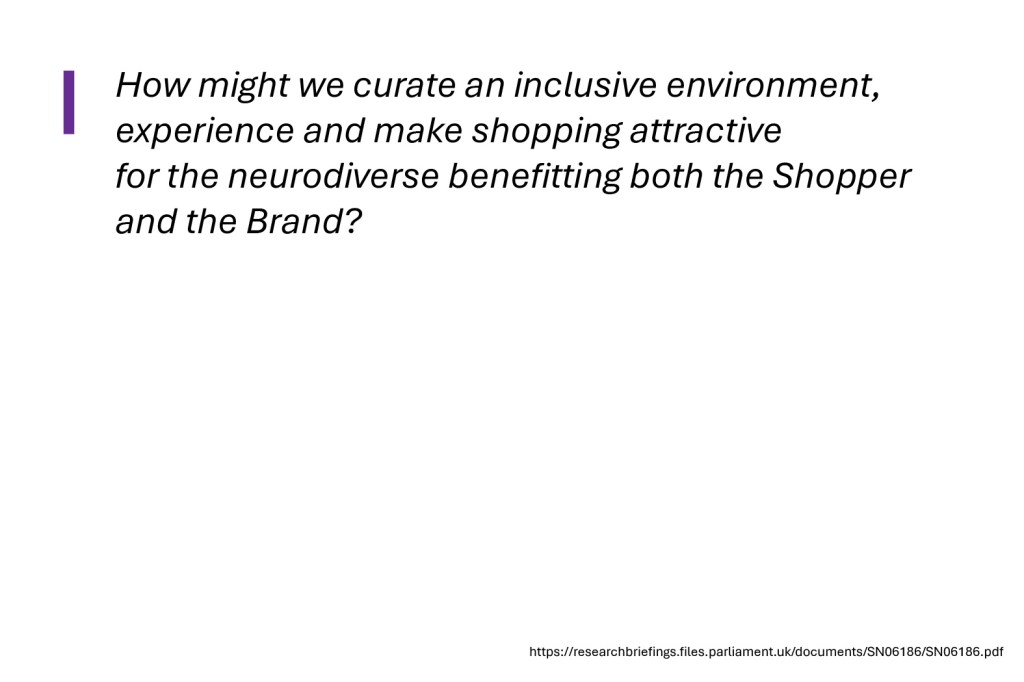

TARGET AUDIENCE: Neurodivergent individuals with ADHD & Autism

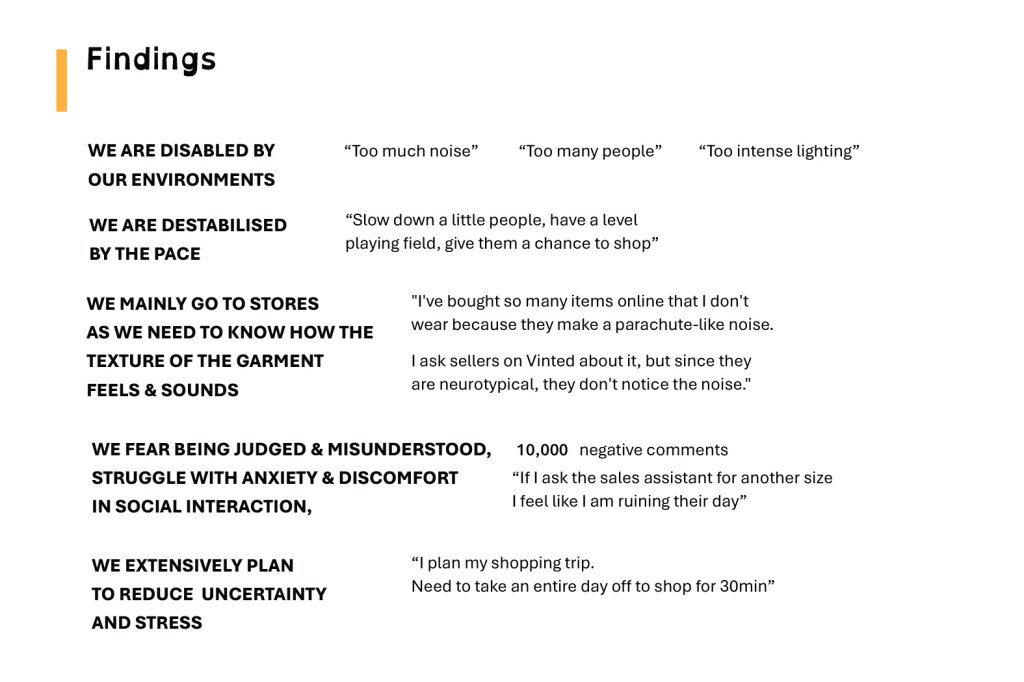
RESEARCH INSIGHTS:

DESIGN PROCESS:

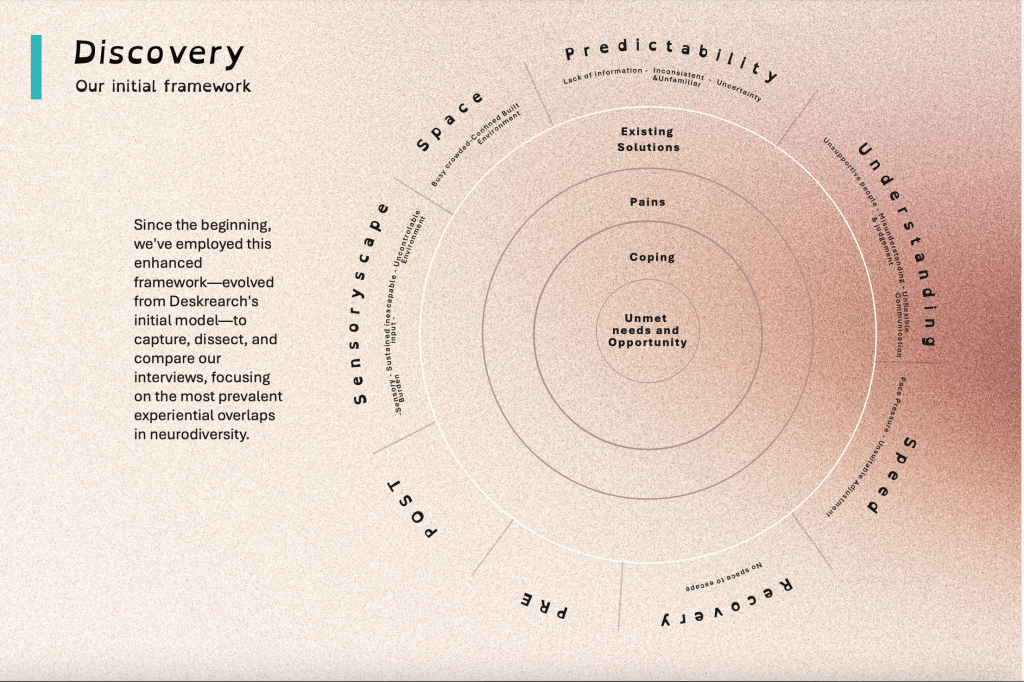
FRAMEWORK EXPLORATION
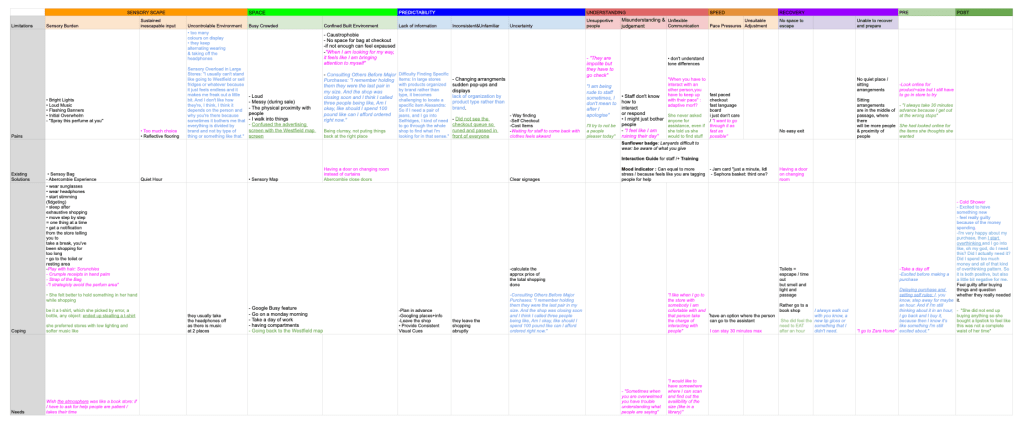
A refined version of our initial work to understand the pain points, needs, and coping mechanisms of neurodivergent individuals.
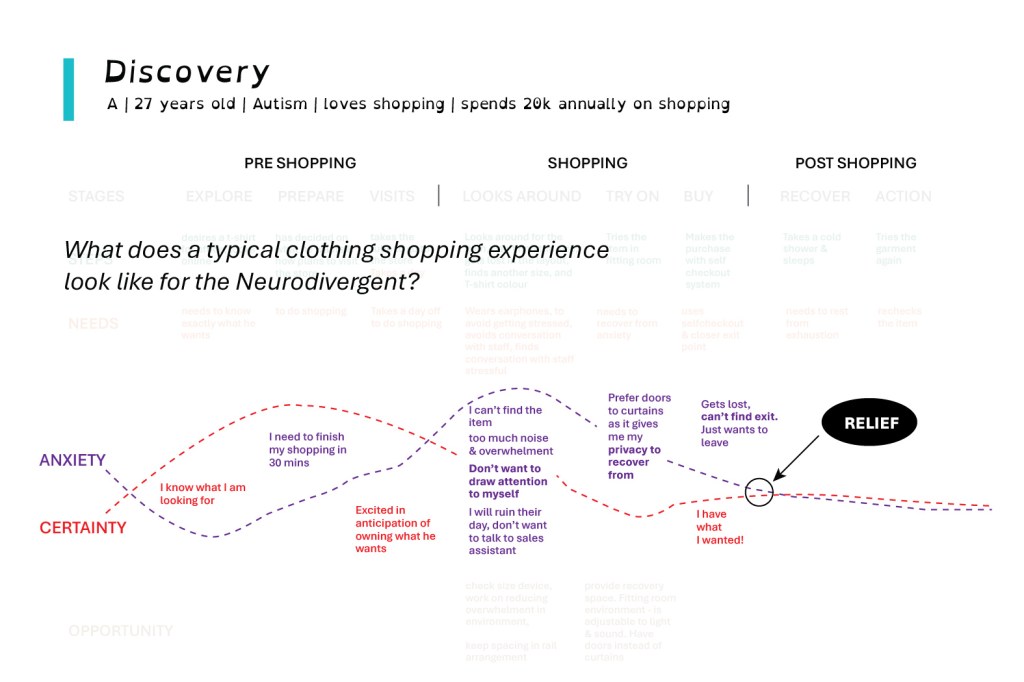
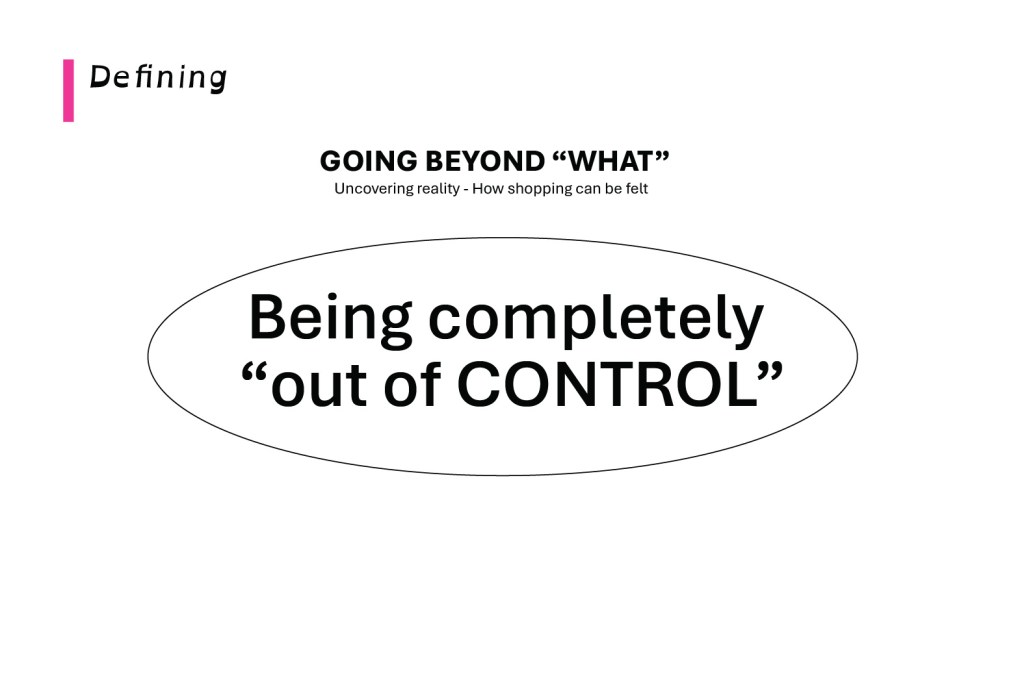
We embarked on several service safaris and shopping shadowing, which provided us with insights into the shopping experiences of neurodivergent individuals.


KEY DELIVERABLES:

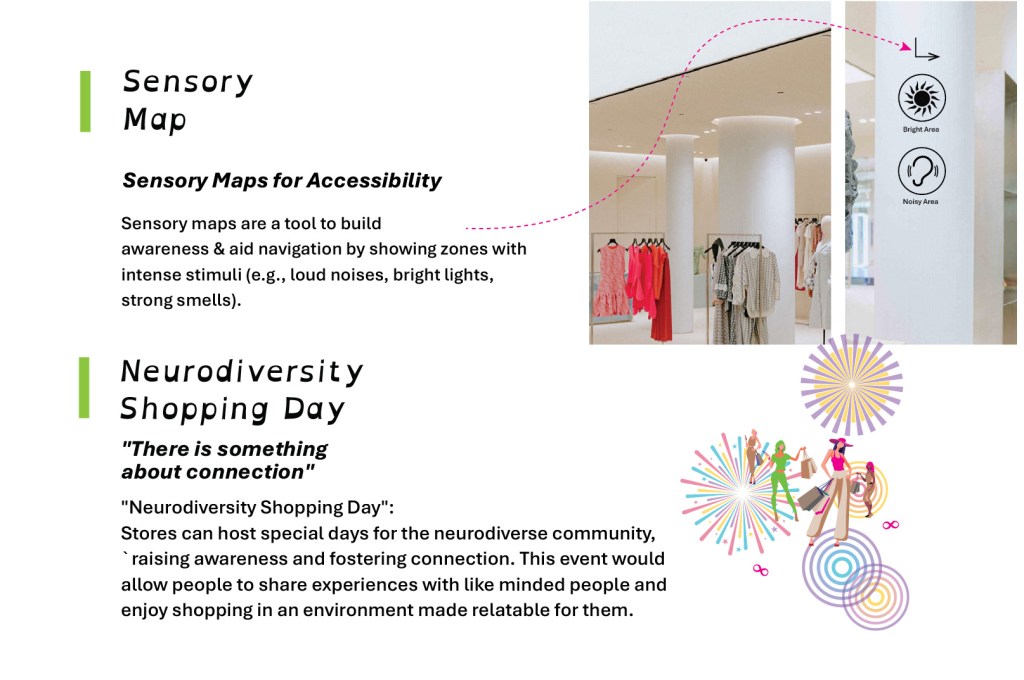
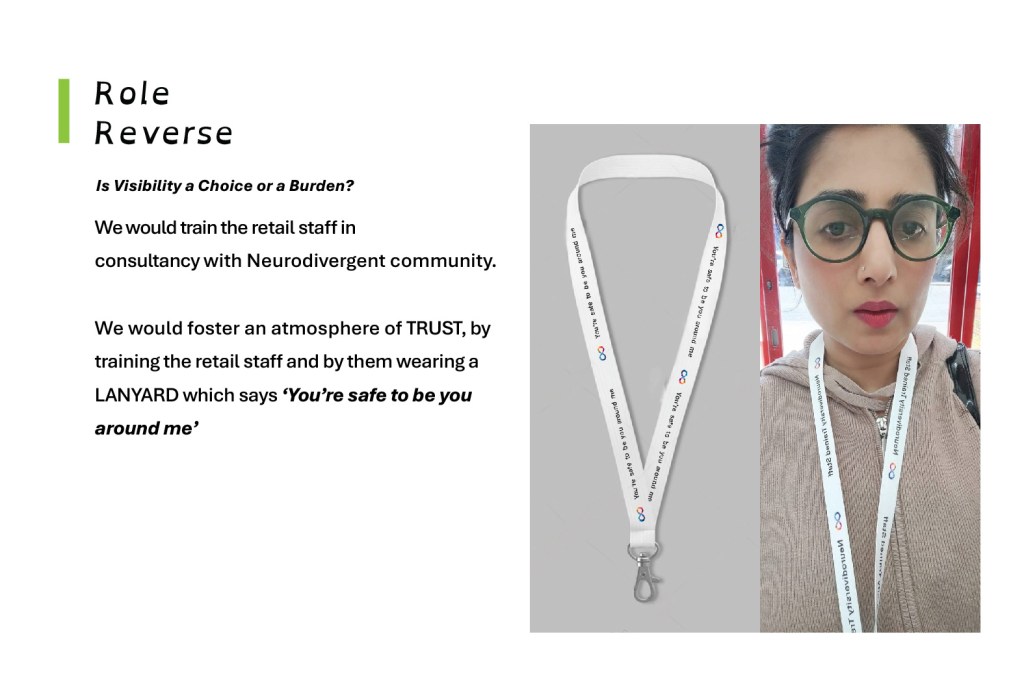
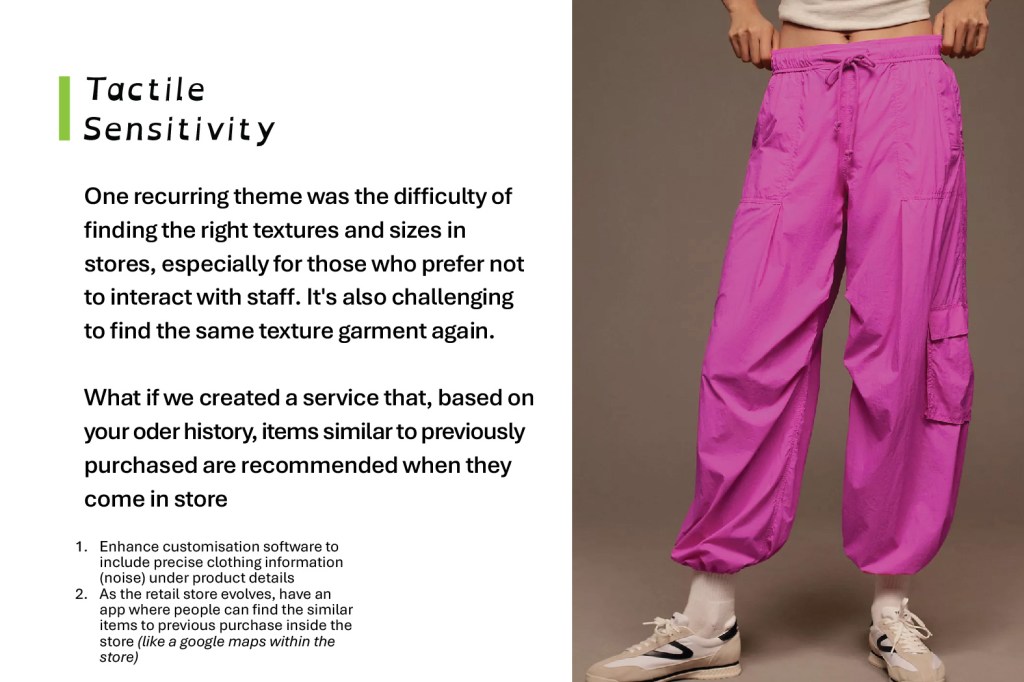

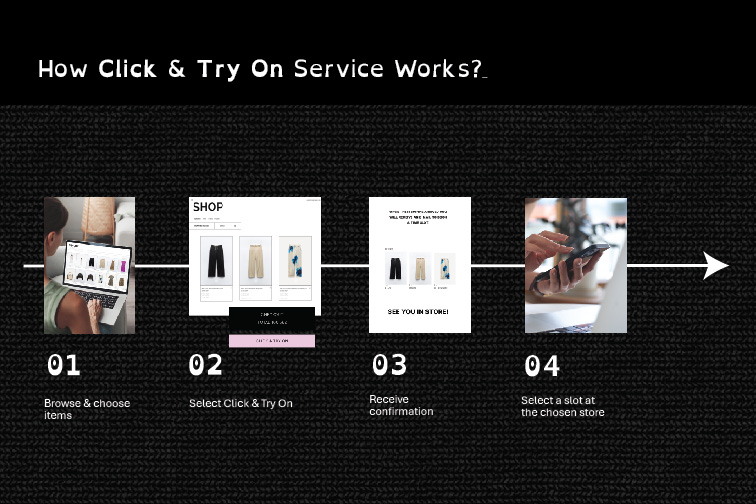

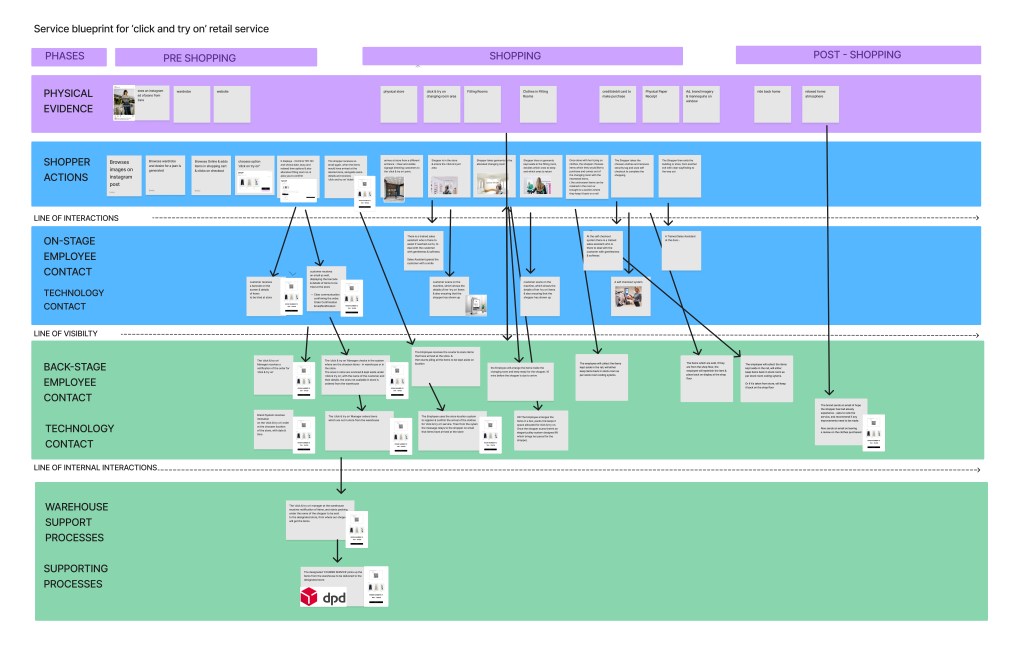
this is the service blue print I developed for the ‘click & collect’ service

LEARNINGS:
• In-person shopping remains essential for many neurodivergent individuals, especially due to needs like texture sensitivity and assurance of garment size and colour — experiences that cannot be fully replicated online.
• Retail footfall is unpredictable: Even though brands invest heavily in targeted online marketing, they cannot control or predict exactly who enters their physical stores, highlighting the need for universal, inclusive in-store experiences.
• Queue management impacts revenue and loyalty: A small observational test showed that crowded queues caused customers to abandon their shopping within half an hour. Over time, such operational inefficiencies can lead to significant financial losses and erosion of brand loyalty.
 Bosky Doshi